
The Verona Cemetery Association is a corporation which was legally formed as a membership corporation, a not-for-profit organization. All persons who are lot owners, either by purchase or inheritance, are members of the corporation.

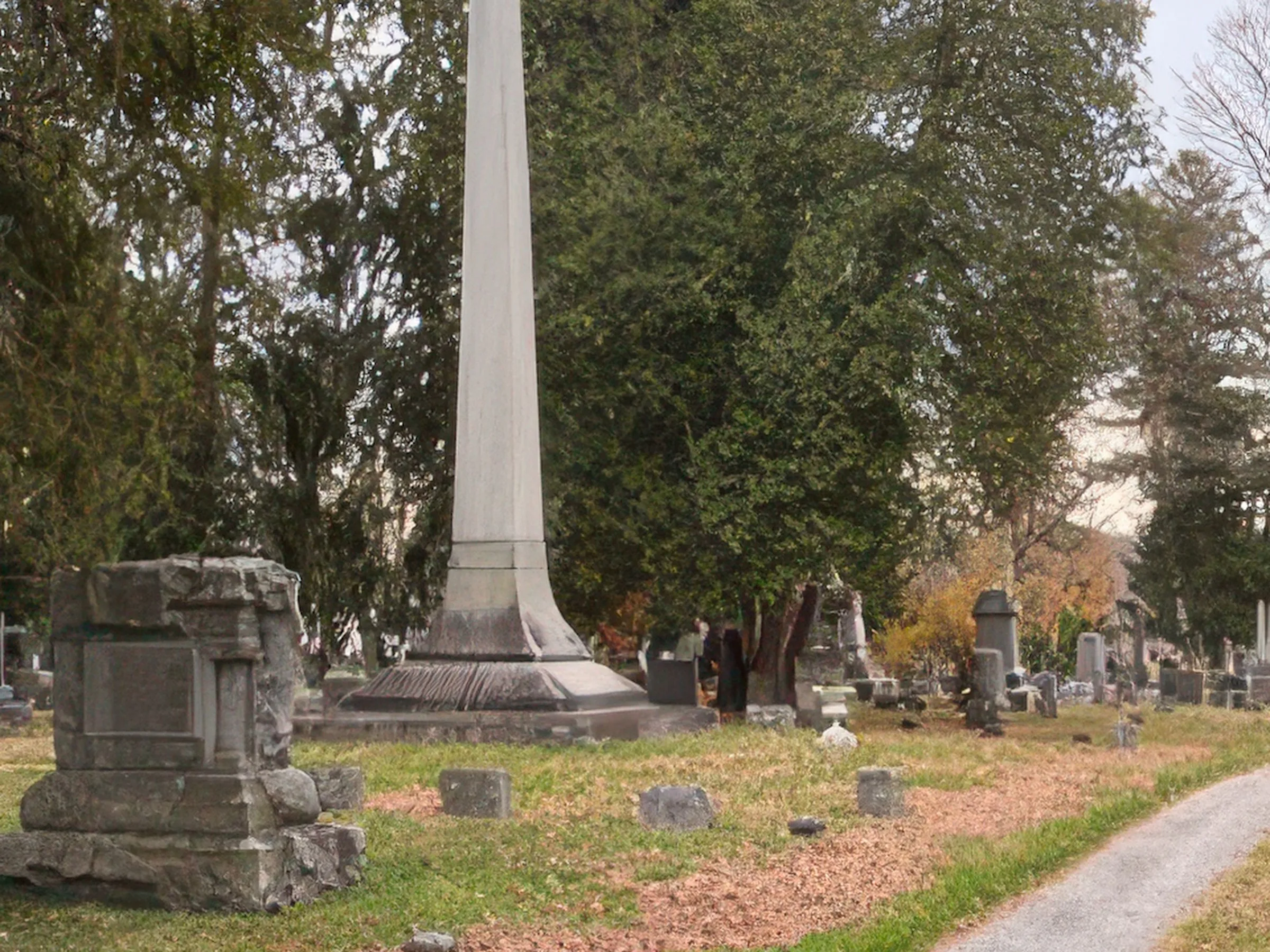
At the date of the incorporation in 1850, it was known as the Verona Burying Ground Association, soon changed to Verona Burial Ground Association. At dedication ceremonies held on September 25, 1887, it was known as the Verona Cemetery Association, although this name did not become the legal name until 1907.
The original plot of cemetery grounds was the front part of the present grounds, between Main Street and the tool house, on the east side of the main entrance. The oldest burials are in this area and date back to1800, when infant Merritt C. Loomis died at the age of five weeks on June 1st and was buried, according to the date on the marble slab which marks his grave.
Additional land purchases were made to the original cemetery in 1848 (Section B); 1877 (Section C); 1893 (Sections D, E, F); 1942 (Florence Miller); 1958 (Albert and Samuel Dam).
The entire cemetery, except the most original grounds, is divided into sections and they into numbered lots, varying in size. The standard-size lots acquired beginning in 1877 were for 12 burials, many being half-size. Beginning in 1942, standard-size lots were four burials. As of this writing in 2023, lots are available for any number of burials.
In 1850, secretary records, rules, and regulations were adopted and recorded. Some of these are quite interesting:
In 1858, a resolution provided that “Teams [of horses] shall not be allowed to drive on any part of the ground except on the outside edge of the lot.” It was also resolved that “The sexton may have the grass growing on the ground the coming year, provided he shall cut the weeds, briars, etc., on said lot.”
In 1877, the trustees directed the treasurer to sell the grass growing on the entire lot, also to clear the ground of apple trees, bushes and briars and set up the gravestones which were falling down or leaning.” The first by-laws of the Association seem to have been adopted in 1877.
Military History
Oliver Pomeroy, possibly a Revolutionary War veteran, died in 1805 and is buried in this cemetery in Section A.
Readily visible from Main Street is the monument on the Soldier’s lot, with a life-sized statue of a soldier on the top, wearing a Civil War military uniform, holding his rifle. It stands on a plot of ground 40 feet by 40 feet, with a base measuring 6 1/2 feet square. This plot is owned in the name of Joseph H. Warren Post #615 G.A.R., or Grand Army of the Republic. These were the men who fought to preserve the side of the North in the Civil War.
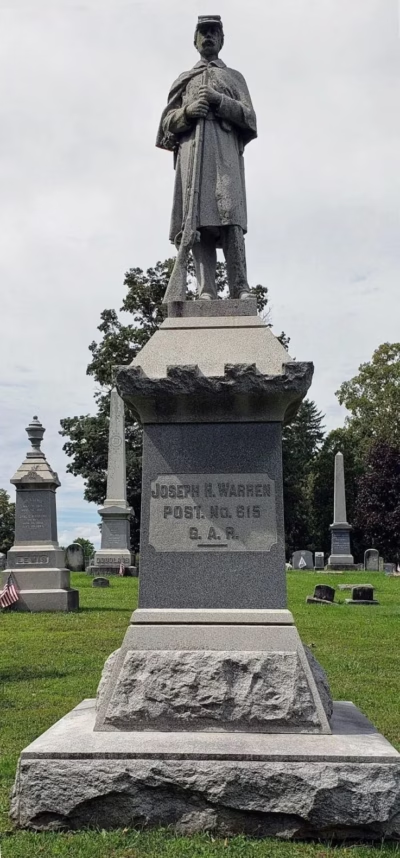
According to the World Book Encyclopedia, the G.A.R. was organized on April 6, 1866, and founded to strengthen the fellowship between the men who fought to preserve the Union, to honor the Union soldiers killed in the war, provide care for their dependents, and to uphold the Constitution, laws, and free institutions of the United States of America. At its greatest size in 1890, the G.A.R. had over 400,000 members. When it held its final meeting in Indianapolis in 1949, only six delegates were able to attend; all of them were age 100 or older.
The Civil War Monument has stood in its present location at the front of Verona Cemetery since it was placed there on Memorial Day in 1902. The monument, made of Barre granite from Vermont, is 17 feet tall. It was flanked by two cannons, each weighing 3,600 pounds, which were contributed to the World War II scrap metal drive in October 1942. There were 24 cannon balls, each weighing 50 pounds, that were also donated and scrapped for the war effort.
Inscriptions on the Civil War Monument are, on one side: “Verona honors the men who fought for, and maintained, the Union of the States.” On another side: “Not for themselves, but for their country: 1861-1865.” Since 1902, the monument has stood in a prominent place as a tribute to the patriotism of the people of Verona.
Nearby the monument stands the flagpole which was presented by the Veterans of Foreign Wars (VFW) and dedicated with appropriate ceremonies on Armistice Day, November 11, 1969. The cost of the pole and provision for future upkeep is being provided by Verona VFW Post #6811.
There are many veterans buried in Verona Cemetery, including representatives from all U.S. Wars, starting with the Revolutionary War. The VFW has assumed the responsibility of securing flags for all veterans’ graves, and for correctly placing them, just before Memorial Day each year.
At least four Revolutionary War soldiers are all buried in the oldest section of Verona Cemetery, which is the front part.
The grave of Captain Josiah Osgood, who died August 17, 1890, in his 90th year, is marked with a flag holder placed by Oneida Chapter of the Daughters of the American Revolution (DAR) in 1903.
The grave of Captain Abijah Joslyn, who died September 1, 1811, at the age of 66, has a marker placed by Fort Stanwix Chapter DAR, Rome, in 1936.
Benjamin Alexander’s grave is also marked by Fort Stanwix Chapter, DAR, as a Revolutionary War soldier. He died July 1, 1841, at the age of 87.
The grave of Solomon Bishop, who died October 17, 1813, at the age of 85 years, is not marked as a Revolutionary War soldier. However, History of Oneida County, New York, by Samuel W. Durant (1878) in Chapter 43, page 584, records that “Solomon Bishop was a Revolutionary War soldier, and was present at the surrender of Burgoyne.
Other Points of Interest
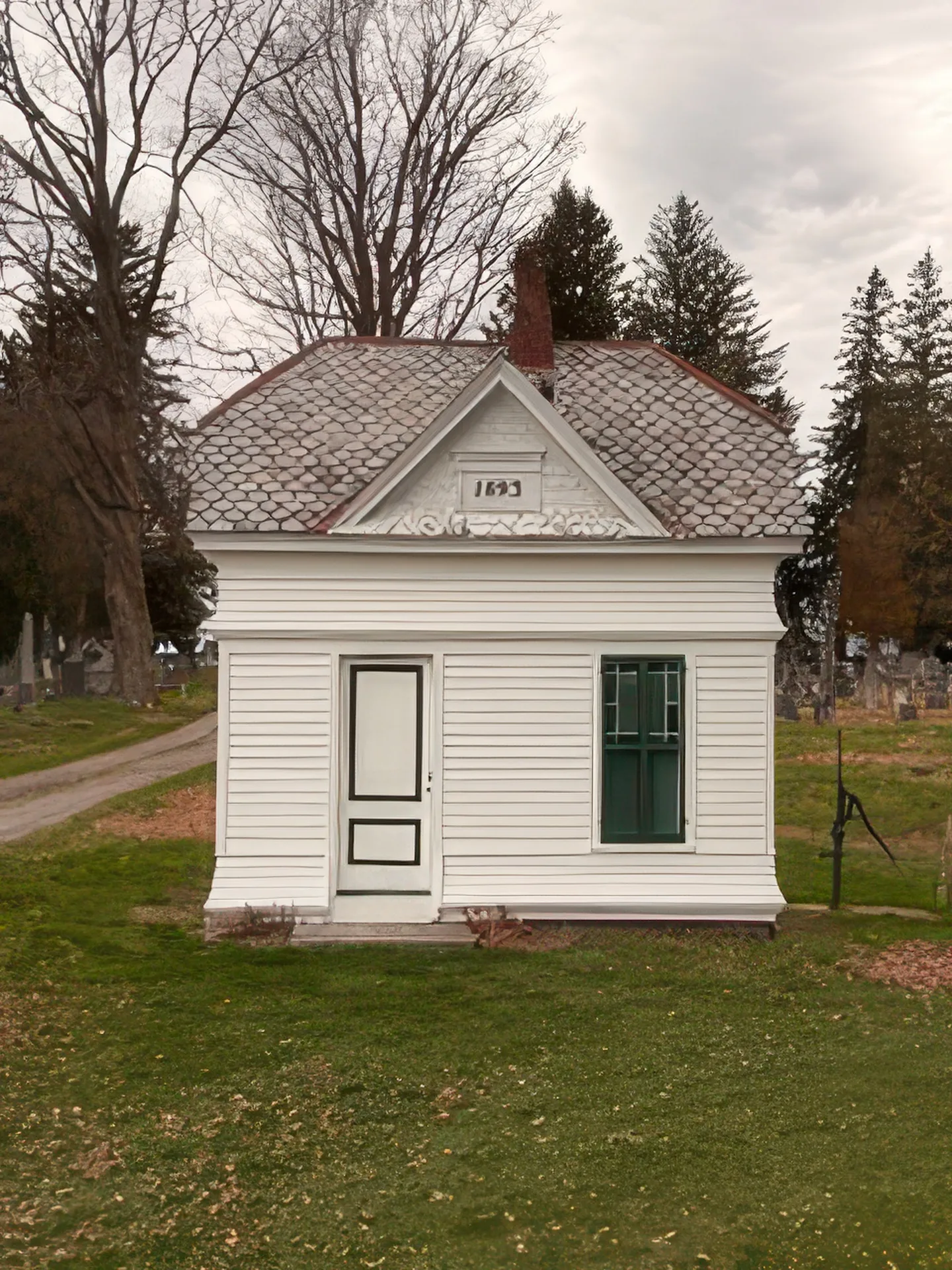
The existing house was built in 1893 as the Cemetery Office and is now being used as a tool house. It has been a useful and faithful source of operations for the cemetery.

The “high point” of the cemetery is the location of the Soper Monument, which is about half-way to the back of the cemetery. This obelisk-type monument, made of grey Barre granite from Vermont, is a spire over 33-feet high that stands on a 12-feet, 8-inches square base. The monument is placed in the center of a plot which is 40 feet by 40 feet. If not otherwise used, this would have been enough room for the burial of 48 people. The owner of the plot, Horace W. Soper (1842-1898), is the only person buried in this plot.
Horace Soper became very successful in the foundry business (iron and metal castings) in Bloomington, Illinois, then Chicago. But as he grew up in Verona, his fondness for the area caused him to be a frequent visitor to Verona for many years. He died in Chicago at age 56. The Soper Monument was set in place on September 7, 1889. The entire structure weighs more than 50 tons and was brought to the Verona Station on four railroad cars. It was then moved to the cemetery on a large wagon drawn by an eight-horse team.
Continuing along the main driveway, before getting to the Soper spire, on your left, nearly over to the school fence boundary line, is a most unusually shaped monument. It marks the burial spot of Rev. William E. York (1825-1880) and his wife, Polly Beach York Joslyn (1830-1902). He was a Methodist minister, who died at age 55. The monument, probably marble, is in the shape of a pulpit, with a tasseled cloth over it and an open Bible on it.

About an equal distance from the main driveway, but on the opposite side of it, is a unique monument marking the resting place of George Frisbie and his widow, who died at the ages of 98 and 84, respectively. Until the time of his death in 1930, he was called Verona’s oldest resident. This monument is around six feet tall, made of marble, and is the shape of a tree partly cut down, branches sawed off, and a short-handled hatchet stuck into it where one limb was cut off. The bark has been peeled back down to provide a smooth place where the names have been carved.
In Conclusion
When referring to the purchase of a lot in the cemetery, the purchaser is not actually buying the lot itself, but the right to the use of the lot for burial purposes. This includes the installation of monuments or grave markers and placing of flowers or shrubbery in compliance with the rules of the cemetery. Deeds to cemetery lots are not recorded with the county clerk as would be, for example, a deed for a building lot.
Members of the corporation are entitled to attend the annual meeting, which for many years has been held in April. Reports are given and trustees are elected. Then the trustees elect the officers and transact routine business of management of the corporation.
Keeping accurate records is of course one of the important responsibilities of a cemetery association. Association records show an accurate listing of all burials made since 1908, and also include many listings of burials before that time. Some of the earliest records are from information collected from the gravestones in the cemetery.
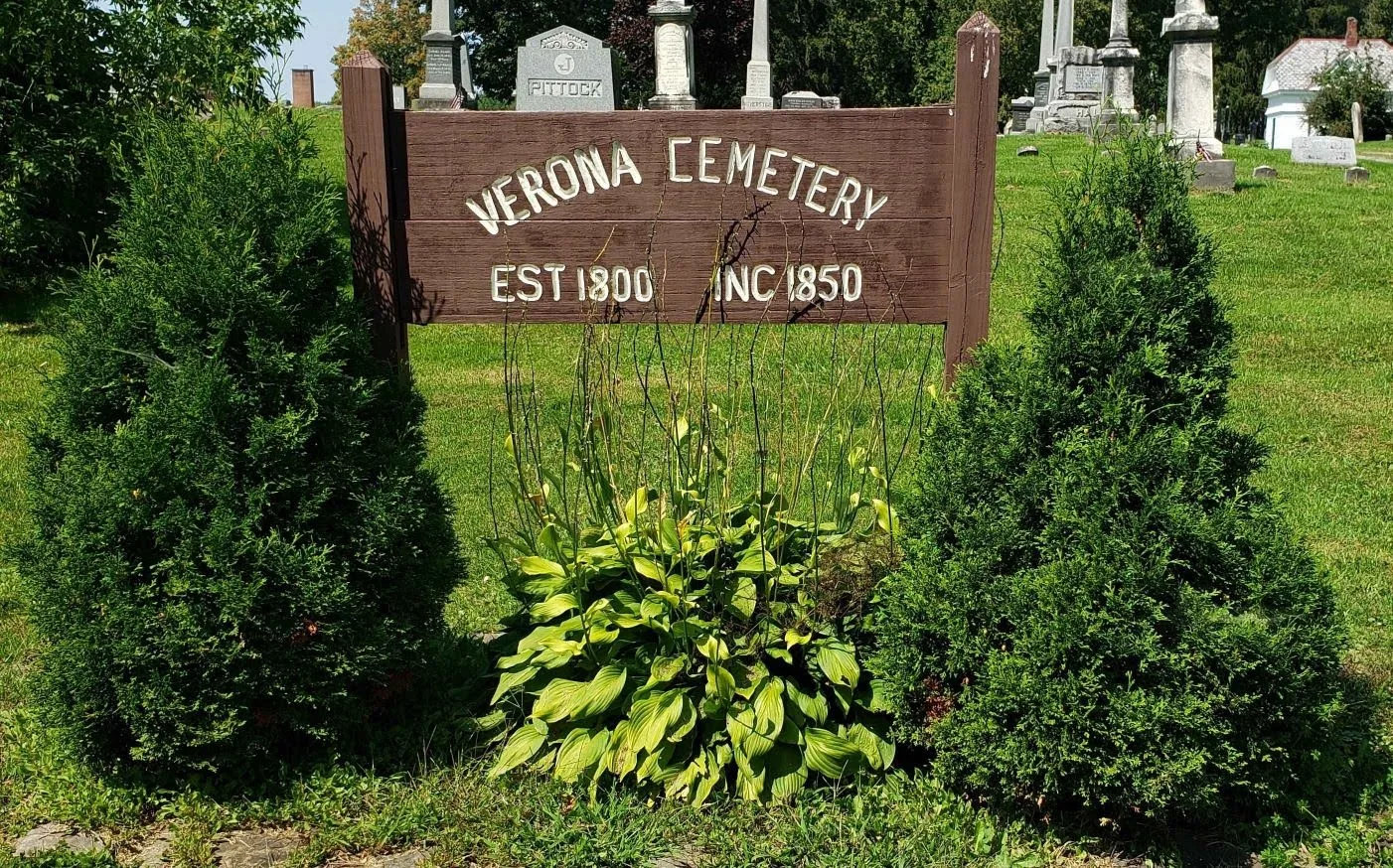
There have been over 2,000 burials in Verona Cemetery so far, beginning in 1800, which was 223 years ago as of 2023. Of course, all of these people had some special connection to Verona. Now looking ahead, thanks to the foresight of those who have gone before us, there are still many more lots available for the future in Verona Cemetery, Verona, New York.
